



















What is a design and development subscription?
A design and development subscription is a flat monthly fee for ongoing design work and the engineering to ship it, instead of a new quote for every project. Ours costs $6,000 a month: we design new pages and features, build them, and join calls with your customers to find what needs fixing next. One flat fee, billed monthly, with no hourly tracking.
Most services sold as design subscriptions are design only. You get files, and someone else has to build them. Ours exists for startups whose bottleneck is getting work live on the website or in the product. Our explainer on how design subscriptions work covers the wider market.
How is this different from an unlimited design subscription?
An unlimited design subscription sells volume: you add requests to a queue and a designer works through them one at a time. Our subscription sells outcomes: a team that decides with you what matters, designs it and builds it. Both have no hourly tracking and a flat monthly fee. The difference is what you get at the end of the month.
Typical unlimited design subscription | Designify subscription | |
|---|---|---|
Published price | About $4,995 a month for the best-known plan, as of 2026, check their site | $6,000 a month, flat |
How work flows | A queue, usually one active request at a time | Priorities agreed with you, worked in order |
Development | Often excluded or limited to higher tiers | Included: we build what we design |
What you receive | Design files | Live pages, features and Figma files |
Customer input | You write the brief | We join your customer calls |
Exclusions | Video, 3D and motion are commonly excluded | Motion and interactions are part of our builds |
Best for | High volumes of small graphic requests | Websites and products that need shipping |
Our guide to how subscription services handle web development goes deeper on the build gap, and our side-by-side Designify vs Designjoy comparison covers the best-known model.
Why does unlimited usually mean one request at a time?
Because a designer can only work on one thing at once, so unlimited refers to the size of your queue, not the speed of output. The best-known plan allows one active request and two users on your side. That works when your requests are small and independent, like ad sets, social graphics or slide tweaks.
It works badly for a website or product feature, where the work is connected and needs decisions, copy and code. A pricing index of design subscriptions published in 2026 found web design often locked behind higher tiers, priced roughly $699 to $2,995 a month, and very few plans include real development. If your request is a new pricing page, a queue gives you a mockup. You still need someone to write it, build it and connect it to billing.
What can you put in the subscription each month?
Anything that needs design and development on your website or product. We agree the priorities with you and work through them, so a month might cover one big project or many smaller ones.
- Website work: new pages, redesigns, CMS setup, campaign landing pages and conversion fixes.
- Product UI: new features, onboarding and activation flows, dashboards and settings. See our product design service.
- Design system: tokens, components and patterns kept in sync between Figma and code.
- Copy: headlines, page copy and in-product text, written by the same team.
- Research input: joining customer and sales calls, then turning what we hear into the next priority.
Hypothetical example: one month on the subscription
For example, suppose a Series A SaaS startup has a new pricing model launching and a demo page that converts poorly. In week one we join two sales calls and hear the same objection about setup effort. We rewrite and redesign the pricing page around that objection, then build it.
In the following weeks we add a setup explainer section to the demo page, design and build an in-product upgrade prompt, and fix a broken mobile layout the team had been living with. This is an illustration of how a month can run, not a real client result.
How does the subscription work week to week?
Free intro call
Thirty minutes on what you're building, what's stuck and whether ongoing work or a one-off project fits better.
Trial week, if you want it
For $1,000 we work one week on a real item from your list, so you judge the work before committing.
Shared priority list
We keep one ranked list with you. You change the order whenever the business changes.
Customer calls
We join customer and sales calls to hear problems first-hand rather than through a brief.
Design, then build
Each item is designed, reviewed with you and built in code, then checked live.
Monthly review
We look back at what shipped and what we learned, and reset priorities for the next month.
Is a design subscription cheaper than hiring?
For most startups before Series B, yes. Hiring sources put a fully loaded in-house designer at $90,000 to $150,000 or more a year, with two to three months to hire, and that buys design without development. Design retainers in the market run about $2,000 to $12,000 a month depending on scope and seniority, as typical quoted ranges.
- per month, flat, design and development
- $6,000
- for a trial week before committing
- $1,000
- projects across 14+ industries
- 60+
At $6,000 a month, our subscription costs $72,000 a year and includes the build. The honest caveat: once you have constant, full-time design work and the budget for a team, hiring in-house builds knowledge we can't. Our breakdown of an in-house designer vs a design retainer runs the full numbers.
When is an unlimited design subscription the better choice?
Pick an unlimited design subscription when you need a steady flow of small, independent graphic tasks and you have developers to build anything web-related. Ad creative, social posts, sales decks and one-off illustrations suit a queue well, and at a lower price.
Pick ours when the work is a website or product that needs decisions, copy, design and code done together, and you want a team that hears your customers directly. If you're weighing a larger creative platform instead, our Designify vs Superside comparison lays out that choice.
What should you ask before you subscribe?
Ask who actually does the work, whether development is included or extra, how many requests are active at once, what's excluded, and what happens to work in progress if you stop. Read the agreement for notice terms and ownership of files and code. Our guide to design retainer agreements lists the clauses to check, and the free 30-minute intro call is the place to ask us all of them.
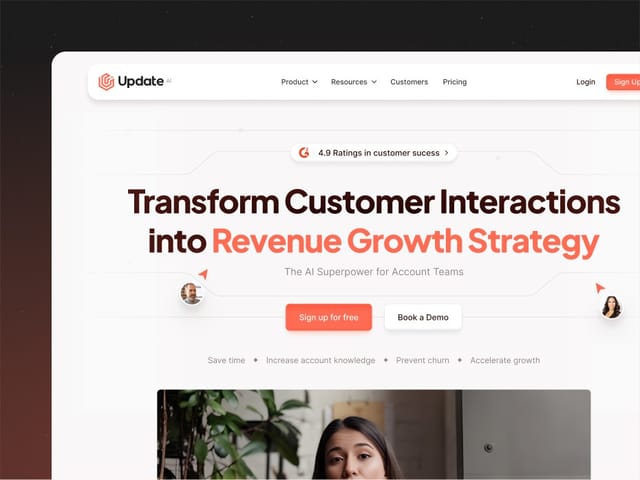
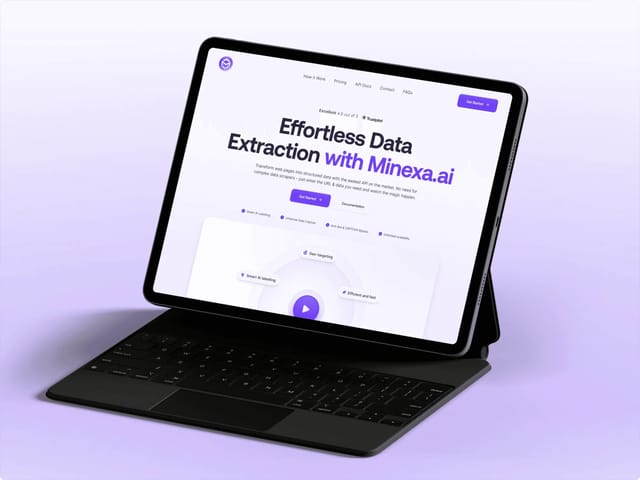
As an example of the work behind it, we handled website strategy, UI/UX and product storytelling for Update.ai, and designed and developed a product-led website for Minexa.ai.