
















What does the $6,000 landing page package include?
Our landing page package is one conversion page, for one audience and one action, at a fixed $6,000. We write it, design it and build it in Next.js with animation, so the page you approve in Figma is the page that ships. Because one team holds the message from the headline to the form, nothing gets lost in a handoff between a copywriter, a designer and a developer.
Deliverable | What you get | Why it matters |
|---|---|---|
Message and copy | Headline, sections, objection handling and CTA labels, written by us | The words decide most of the result, so they come first |
Wireframe | Section order and real copy on a plain layout | You approve structure before anyone argues about color |
Custom design | Desktop and mobile layouts in Figma, built for your brand | No template that a competitor is also using |
Next.js build | A responsive, server-rendered page | Fast to load and readable by search and AI crawlers |
Motion | Animations and interactions that show how the product works | Explains the product instead of decorating it |
Launch checks | Forms, links, metadata, mobile layout and speed tested before go-live | The page works on the day traffic arrives |
What sits outside the package: extra pages (our website package covers up to six pages for $8,000, see pricing), and ongoing testing after launch, which is what the monthly retainer is for. If you only need the design, the $3,000 brand and design sprint is design only.
Who is this landing page design service for?
It suits funded startups with a specific moment the page has to carry: a launch, a raise, a new product line or a paid campaign that's about to start spending. It works best when the product takes some explaining, because that's where copy and design have to work together.
- A good fit: a seed to Series B team with a product that's hard to explain in one line, a founder who wants one accountable team, and traffic you already have or are about to buy.
- A good fit: an existing page that gets visits but few demos, where you suspect the message, not the button color, is the problem.
- Not a fit: you need 20 campaign variants a month. A page builder with a solid template, or our retainer, will serve you better.
- Not a fit: you already have final copy and approved designs and only need a developer. A freelancer can build that for less.
- Not a fit: a budget well under a few thousand dollars. A good template, honestly written, beats a rushed custom page.
Why does copy come before design on a high converting landing page?
Copy comes first because a visitor decides whether to stay based on what the page says, and layout can only support a message that already exists. Landing-page cost guides we reviewed note that two quotes for the same page can differ tenfold depending on whether strategy and writing are included. That gap is real: a designed page with placeholder copy is a different product from a page built around a tested message.
Small word choices matter too. Practitioner sources rate generic labels like Submit and Request a demo among the weakest CTAs, and in one Optimizely test a Watch a Demo button converted at 1.59% against 0.91% for Get Started. We write CTAs that say what happens next. Our guide to writing landing page copy shows the process we follow.
How do we design and build your startup landing page?
Free intro call
Thirty minutes on the goal, the audience, where traffic comes from and what proof you have. We tell you if the package fits.
Message brief
We collect sales call notes, customer quotes, objections and competitors. Our landing page brief lists what we ask for.
Copy and wireframe
You review the full copy on a plain layout. This is where the big decisions happen, and they're cheap to change here.
Visual design
Desktop and mobile layouts in Figma, with notes on motion and states such as hover, error and success.
Next.js build
We build the approved design in Next.js, add the animations and keep a close eye on load speed as we go.
QA and launch
We test forms, links, metadata, mobile and speed, then launch on your domain and walk you through it.
What makes a startup landing page convert?
A landing page converts when one specific visitor understands what you do, believes it and knows what to click, all within the first screen or two. Most of that comes down to a few decisions made well, not dozens of tricks.
- One audience and one action. A page for everyone persuades no one, and two competing CTAs split attention.
- Proof next to claims. Logos, numbers and quotes placed beside the claim they support, not parked in a strip at the bottom.
- Objections answered on the page. Pricing, security, setup effort and switching cost, in the visitor's words.
- Speed. Heavy animation that delays the first screen costs you visitors. We design motion inside a performance budget, as covered in our guide to fast landing pages.
Don't judge your page against a single benchmark. Unbounce's conversion benchmark report puts the median at 6.6% across all industries and about 3.8% for SaaS, but rates swing widely by traffic source and offer. Want a quick read on your current page first? Try our landing page grader.
Should your landing page be built in Next.js, Framer or Webflow?
Our $6,000 package is built in Next.js, because it gives us full control over speed, rendering and motion. Framer and Webflow are better when your marketing team needs to publish its own variants every week. We build in all three, so the choice comes down to who will edit the page after launch.
Platform | Pick it when | Trade-off |
|---|---|---|
Next.js | Speed, custom motion and full control matter most | Edits go through a developer or a CMS we set up |
Framer | Marketers want to edit and launch variants themselves | Less control over complex logic and integrations |
Webflow | You need a structured CMS and a visual editor | Complex interactions take more care to keep fast |
If Next.js is already your product's stack, our Next.js development page explains how we fit the page into your repo. If you need Framer or Webflow instead, tell us on the call and we'll scope it.
Can a startup A/B test its landing page?
Usually not in a way that means much at launch. Spotler's guide to test sizes estimates you need roughly 15,000 to 20,000 visitors per variant to detect a 15% lift from a 2% baseline, which most early pages won't see for months. So we do the research up front instead: customer language, objections and competitor messaging shape the first version.
Once traffic builds, testing headlines and offers becomes worthwhile. That ongoing work fits the $6,000-a-month retainer, where we design, build and test new variants without a new contract each time.
Which landing pages and funnels have we designed and built?
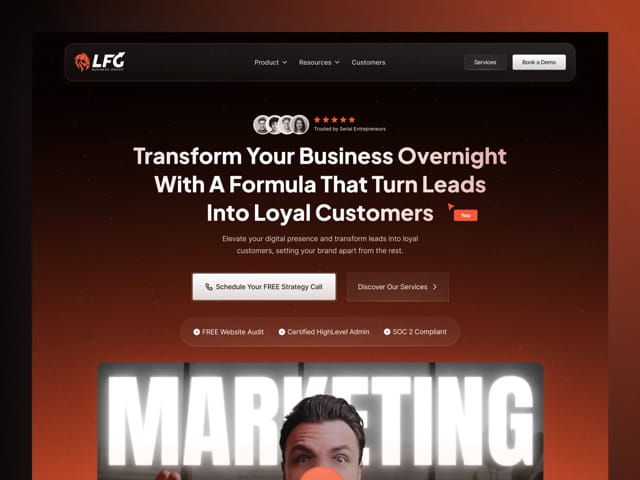
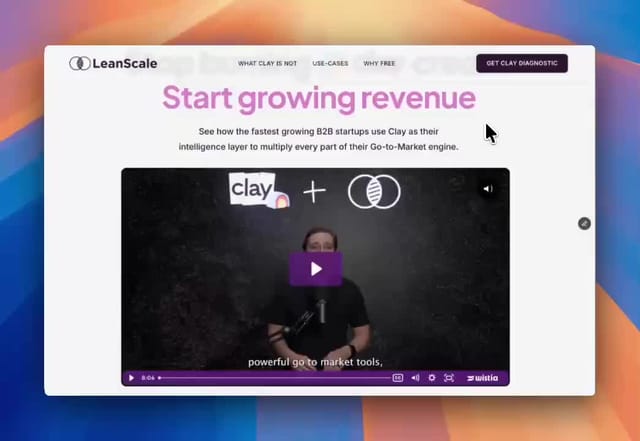
Most of our landing work is for products or offers that are hard to explain quickly. For LFG, we designed and developed a long-form B2B funnel that clarified a broad marketing offer, answered buyer objections and guided prospects toward booking a call. For LeanScale, we built a conversion-focused B2B funnel for Clay implementation consulting, with educational content that positions the team as the authority.
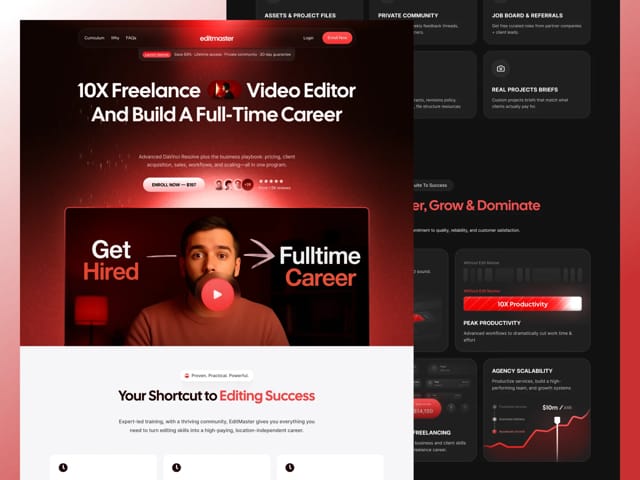
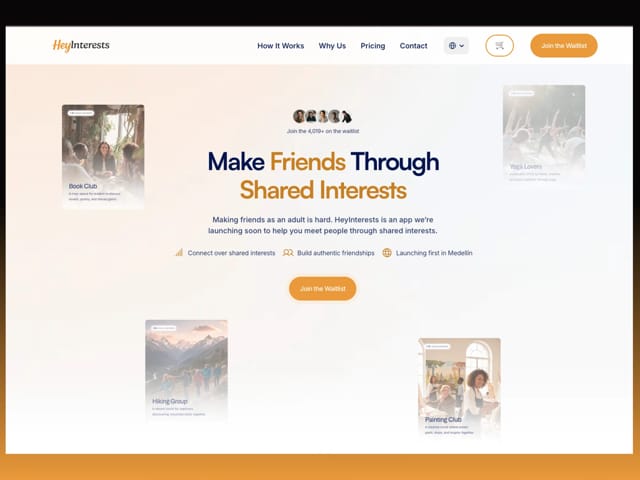
We redesigned EditMaster's long-form course funnel to make a complex offer clearer and more credible, and for HeyInterests we led the copy, UI/UX design and build of a launch site made to grow its waitlist. Each started with the words.
What happens on the free intro call?
The intro call is 30 minutes and free. We'll ask what the page has to achieve, who it's for, where the traffic will come from and what proof you can show. You'll get a straight answer on whether the $6,000 landing page is the right package, or whether a website, a sprint or nothing at all suits you better. Timelines are scoped on the call, because they depend on how ready your inputs are and how quickly you can review.