



















What do London fintech startups need from a website?
London fintechs need a site that sells and survives a compliance review at the same time. In the UK, financial promotions have to be fair, clear and not misleading under the FCA's rules, and the Consumer Duty raises the bar on how well customers understand what they're buying. That changes how we write, not only what the legal footer says.
- Claims your compliance team can approve. Benefits stated precisely, with risks and conditions placed near the claim rather than buried.
- The regulated entity, named clearly. Who is authorized, or which partner holds the permissions, in plain English.
- Fees you can find. A fee table or calculator that matches the product terms exactly.
- Risk warnings designed in. Where a warning is required, it's part of the layout from the first draft, not pasted in at the end.
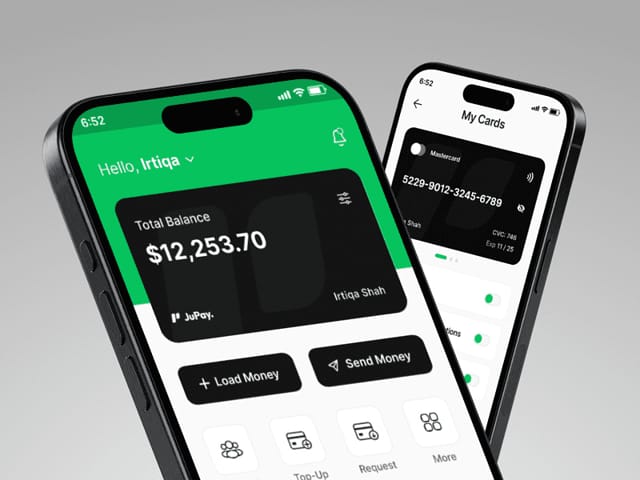
We've designed and built sites for payments and finance companies, including Jupay and Lakehouse Partners. Our payments industry page and the guide to fintech website compliance go deeper. We're designers and writers, not lawyers, so final approval of any promotion stays with your compliance team.
How do we work with London teams on UK time?
London is on GMT, UTC+0, in winter and on British Summer Time, UTC+1, from the last Sunday in March to the last Sunday in October. We agree a standing call slot inside your working day when we scope the project, and between calls everything moves in writing.
Situation | How we handle it |
|---|---|
Weekly progress | One standing call in UK hours, plus written notes and recorded walkthroughs |
Reviews | Comments in Figma and on the staging site, consolidated into one list |
New York colleagues | Shared calls in the London afternoon, which is the New York morning |
European customers | UK time sits inside the core European workday, so joint calls are easy |
Clock-change weeks | The UK and US change clocks on different dates, so we recheck shared call times each March and autumn |
What UK privacy and accessibility basics should the site handle?
A UK site has to ask before it sets non-essential cookies. Under the UK GDPR and the PECR rules the ICO enforces, analytics and advertising cookies generally need consent, which means a real choice, not a banner that only says OK. We set up consent so tracking tools load only after a visitor agrees.
- Consent that works. Accept and reject given equal weight, with tags that respect the choice.
- A privacy notice that matches reality. It should list the tools the site actually runs, so we share the list with whoever writes it.
- Accessible by default. Contrast, keyboard navigation, focus states and alt text built to WCAG guidance. If you sell into the EU, the European Accessibility Act now applies to some digital services, so ask counsel whether yours is one of them.
- Forms that collect only what you need. Fewer fields mean less data to protect and better conversion.
Our guide to website accessibility for startups explains WCAG and the EAA in more detail.
Should a London startup choose Webflow or Next.js?
Choose Webflow when your marketing team will run the site and wants to publish pages, blog posts and case studies without a developer. Choose Next.js when engineers will own the site, you need custom logic such as calculators or authenticated areas, or you want it in the same stack as the product. We build in both, plus Framer.
London fintechs often end up with a mix: a Webflow marketing site the growth team can edit, with the onboarding flow in the product's own stack. The deciding question is who makes changes after launch. See our Webflow development page and how to hire a Webflow developer for what to check.
Should the site be in British or American English?
Write in British English if your buyers are mainly in the UK and Europe, and American English if you're selling into the US. A UK fintech with US ambitions usually picks one for the core site and adds a separate US page set later, because spelling is the small part. Terms change too: current account versus checking account, sort code versus routing number.
We write in American English by default and switch to British English for UK-first sites. If you plan more markets, set up the URL structure early, with language and region folders and correct hreflang tags. Our multilingual website guide covers the structure.
How does our process work?
Free 30-minute call
Booked in UK hours. We learn the product, the regulatory context and the deadline, and confirm the fixed-price offer.
Copy first
We write the pages so your compliance team reviews claims and warnings before anything is designed.
Design
Custom design in Figma for desktop and mobile, with risk warnings and disclosures placed from the first draft.
Build and launch
Webflow, Framer or Next.js, with consent, analytics and forms set up. Timelines are scoped on the intro call.
How much does a startup website cost in London?
Our prices are fixed and in US dollars: $8,000 for a website of up to 6 pages plus $500 per extra page, $6,000 for a landing page, $3,000 for a brand and design sprint, and $6,000 a month for a design and development retainer. Typical UK agency rates we see quoted run about £55 to £90 an hour, and they vary by firm and scope.
A hypothetical scope for a London B2B fintech
For example, suppose a seed-stage London fintech selling to finance teams needs a homepage, product, pricing, security, about and a regulatory information page. That's 6 pages, so it fits the $8,000 website. Its compliance lead reviews the copy before design. A later US page set would be scoped separately, as extra pages at $500 each.
For more UK benchmarks, read web design cost in the UK. To test how we work first, the trial week is $1,000. Otherwise, the next step is a free 30-minute call, and every offer is on our pricing section.